Driveway Crack Filling & Repair
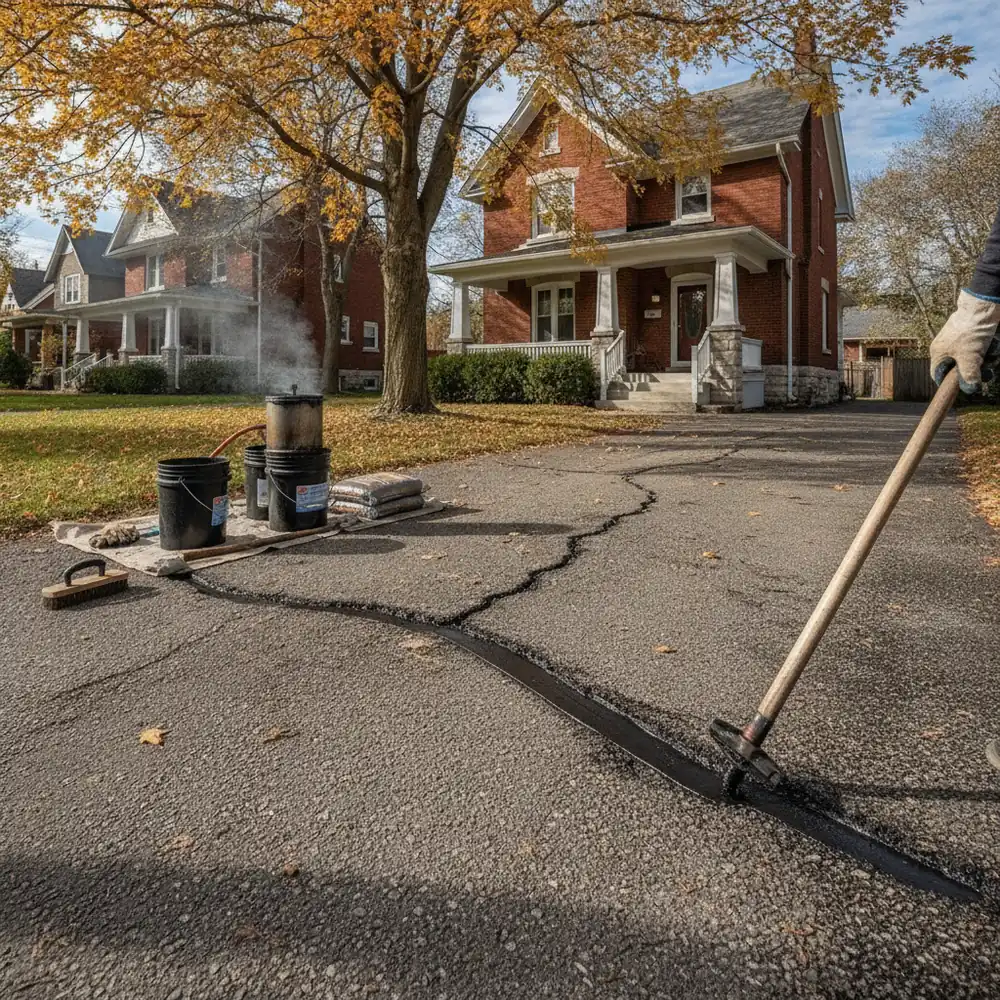
A crack that looks cosmetic in July is a pothole waiting for winter. Water gets into the crack, freezes, expands, and widens it — repeat that cycle a few winters running and a hairline crack becomes a real repair. Filling cracks while they're still small is dramatically cheaper than patching a pothole later.
Crews use hot-pour rubberized crack filler for durability (it flexes with temperature swings instead of cracking again immediately) — cold-pour product is sometimes used for very minor cracks but doesn't hold up as long in this climate.
- Hot-pour rubberized filler — flexes with freeze-thaw instead of re-cracking
- Cracks cleaned and dried before filling for proper adhesion
- Often bundled with sealcoating for a complete refresh
- Minor pothole patching available on assessment
What it costs in Kitchener
- Minor crack filling (linear ft): $2–$5 per linear ft
- Typical residential driveway crack package: $150–$300
- Combined with sealcoating: often discounted vs. booking separately
- Minor pothole patch: $100–$250 depending on size
Crack Filling & Repair FAQs
How do I know if a crack is serious?
Width over about 1/4 inch, or cracks that are spreading or connecting to others, are worth addressing sooner rather than later. When in doubt, a free assessment gives you a straight answer.
Does crack filling look bad — like a black line?
The filler is dark and does show as a line at first, but it blends in visually once combined with a full sealcoat, and it's far less noticeable than a widening crack or pothole.
Can this be done separately from sealing?
Yes, though many people bundle both since crews are already on-site — ask for a combined quote.
Will filling stop the crack from getting worse?
Filling stops water intrusion, which is the main driver of crack growth from freeze-thaw — it won't reverse existing damage but does stop it from progressing.